
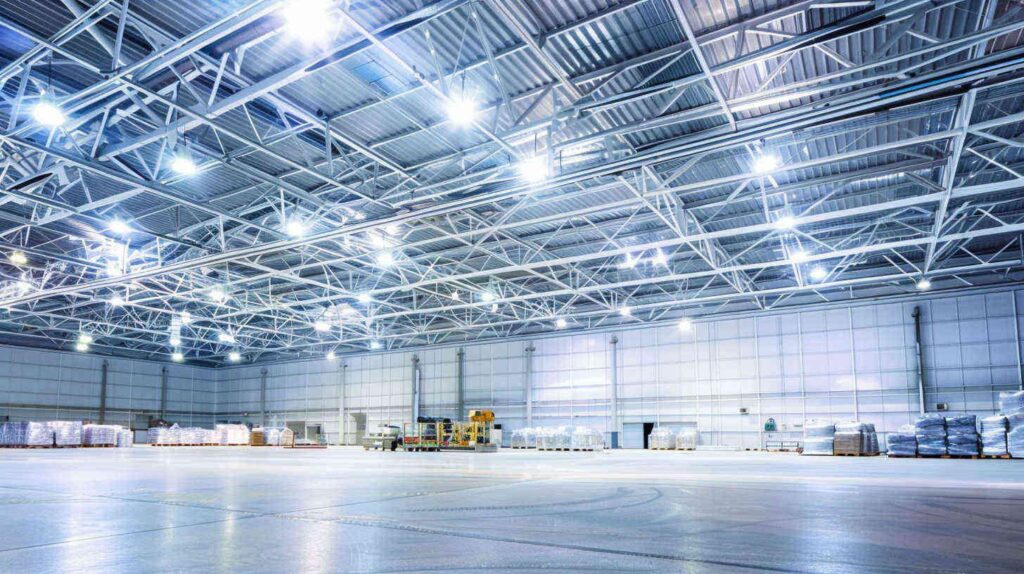
Distribution centers move at a high clip, and small visual mistakes can ripple into lost time, returns, and safety incidents. The right lighting plan helps teams read labels faster, spot hazards sooner, and navigate aisles with confidence.
Why Lighting Directly Affects Accuracy and Safety
Lighting shapes how quickly and accurately the eye acquires information. In a DC, workers shift focus from floor to rack, scan barcodes, and distinguish similar SKUs in tight slots. If light levels are patchy or glarey, the eye works harder, reaction time slows, and fatigue sets in. Better uniformity, useful vertical light on pick faces, and tight glare control create conditions where people can do fast, precise work all shift long.
Uniformity and Vertical Light on the Pick Face
Many warehouses focus only on horizontal footcandles at the floor, but most picking decisions happen at the shelf. That calls for vertical light—steady levels on labels, bin interiors, and carton edges. Uniform vertical light reduces the contrast swings that cause misreads, especially on glossy packaging. It also helps scanners grab clean barcodes on the first pass, trimming seconds that add up across thousands of lines.
Glare: The Hidden Driver of Errors and Near Misses
Glare isn’t just uncomfortable—it washes out detail. High glare from bare LEDs or poorly aimed fixtures can make white labels bloom and turn small type into a haze. Operators on forklifts are especially vulnerable when looking up at racking or monitors positioned near light sources. Thoughtful shielding, diffusers, and optics that limit high‑angle brightness reduce eye strain and keep critical information legible from more viewpoints.
Controlling Shadows in Long Aisles
Deep shelves and tall pallets create strong shadows that hide SKUs and trip points. Spacing and optic choice determine whether beams overlap smoothly or leave dark bands. Aisle‑specific optics shaped for narrow runs push light down the length of the aisle and into the vertical faces where work happens. Mounting height, row spacing, and aiming all contribute to even coverage with fewer blind spots.
Upgrading to high bay LED lights in aisles can cut shadowing and reduce mis-picks during peak shifts.
Practical Design Targets for Distribution Centers
Every facility has its own mix of racking heights, aisle widths, and tasks, but certain targets are commonly used because they track well with accuracy and safety.
● Light levels: Aim for steady horizontal light on the floor and consistent vertical light at the pick face. Many operations see good results when vertical light on labels is comparable to floor light, avoiding dramatic jumps that fatigue the eye.
● Uniformity: Strive for smooth ratios so the brightest spots aren’t dramatically higher than the dimmest. Consistency across the length of an aisle is as important as within a single bay.
● Color and clarity: Neutral‑white CCT helps with color recognition on packaging. Solid color rendering supports accurate reading of multicolored labels and hazard markings.
● Flicker and stability: Low‑flicker drivers limit visual stress, particularly around high‑speed conveyors and handheld scanners.
These targets set a baseline. Photometric modeling then adapts them to your ceiling height, rack profile, and aisle geometry.
Fixture and Optic Choices That Pay Off
Modern high‑bay families include optics tuned for open areas and for narrow aisles. In open staging zones, wider distributions limit fixture counts while keeping the floor even. In racked aisles, narrow or aisle‑specific optics throw light onto vertical faces and reduce spill that would otherwise bounce into eyes and cause glare. Lenses and diffusers protect LEDs from dust and washdown while smoothing brightness at high angles.
Thermal performance and driver quality matter as well. Warehouses see wide temperature swings, especially near dock doors and mezzanines. Drivers rated for those conditions keep output stable, so visual conditions stay consistent at the start and end of each shift.
Controls That Improve Safety and Throughput
Occupancy, Zones, and Daylight
Aisle‑level occupancy sensors bring light up quickly where people are working and settle to a safe background elsewhere. Zoning avoids the “tunnel” effect where a single bright patch sits in a darker field. Where skylights or clerestories exist, daylight sensors trim output while holding target levels, preventing the drift that leads to squinting at labels in late afternoon.
Start‑of‑Shift and Task Modes
Preset scenes support different tasks: full output during cycle counts, slightly lower for routine storage, and boosted light in quality‑check zones. Clear, predictable scenes reduce the temptation for ad‑hoc overrides that create inconsistent conditions across the floor.
A Step‑by‑Step Playbook for Your Next Upgrade
● Baseline: Capture current pick error rates, near‑miss reports, scan retries, and average pick time by zone. Note complaint hotspots where staff report glare or shadow bands.
● Model and mock: Run photometrics for representative aisles, then install a short pilot row. Compare label legibility, scan success, and operator feedback before and after.
● Tune: Adjust mounting height, aiming, and controls timing based on pilot findings. Lock in final specs for optics, shielding, and drivers that matched the best results.
● Rollout and verify: Stage the install by zone, then re‑measure errors, scan retries, and incidents at 30 and 90 days. Share quick wins to keep momentum.
Common Mistakes to Avoid
● Chasing maximum lumens without addressing glare control, which can wash out detail even at high light levels.
● Specifying open‑area optics in narrow aisles, leading to bright floors but dim pick faces.
● Ignoring vertical light measurements and relying only on floor readings.
● Leaving controls in default settings that cause slow ramp‑up or jarring changes between zones.
Measuring What Matters After Go‑Live
Sustained gains come from tracking the right indicators. Pair maintenance records with safety and quality data so you can spot trends. If mis‑picks creep up in a zone, check for lens damage, soiling, or sensor misalignment. Seasonal changes may affect daylight contribution around docks; small control tweaks can keep conditions stable without new hardware.
Workers feel the difference when shadows recede and labels pop into view from the first glance. Supervisors see it in cleaner first‑pass scans and steadier throughput. Safety teams see it in fewer near misses and better visibility at intersections. When lighting supports how people actually work, accuracy and safety move in the right direction together.
Conclusion
Cutting pick errors and accidents is not just about more light—it’s about the right light in the right places. Consistent vertical light on pick faces, smart glare control, and tuned controls create a calmer visual environment where decisions happen faster and with fewer mistakes. With a measured approach—baseline, pilot, tune, and verify—distribution centers can upgrade lighting with confidence and see gains in both safety and throughput.