
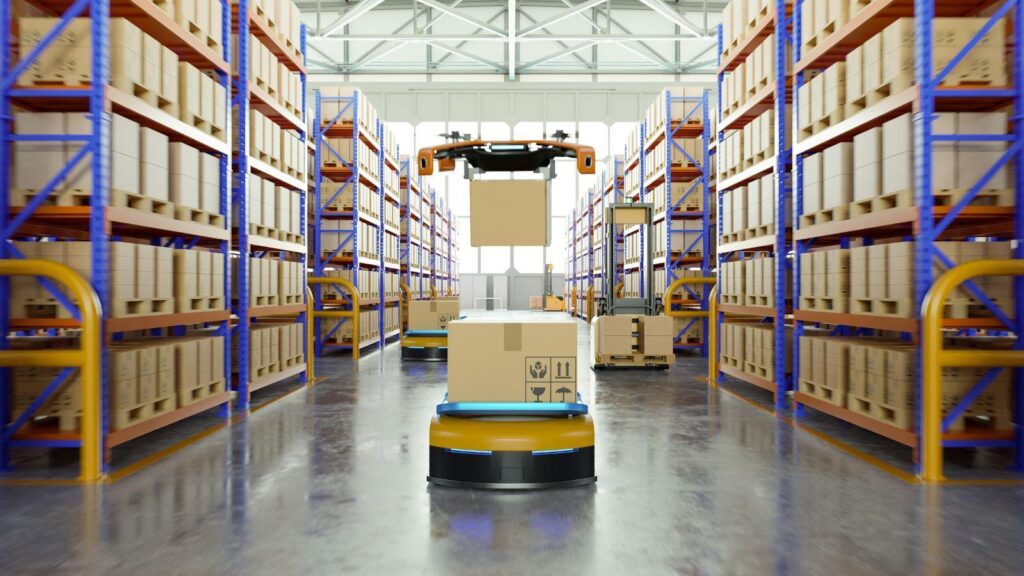
For most of the last decade, the answer to “we’re out of room” was simple: lease more square footage. That math worked when industrial rent was cheap and available inventory was plentiful. Neither condition holds anymore. Warehouse and distribution operators are now facing a market where expansion is expensive, new space is scarce in the markets that matter, and the lease terms on offer rarely match the flexibility a growing operation needs.
That shift has pushed a lot of facility managers toward a different question. Instead of asking how much more space they need, they’re asking how much more capacity they can pull out of the space they already have. The answer, increasingly, involves rethinking storage density rather than the building’s footprint.
Rising Cost Per Square Foot Is Changing the Calculus
Industrial real estate has tightened considerably in high-demand distribution corridors. Rent increases, longer lease commitments, and construction costs for new builds have made square footage one of the most expensive line items in a warehouse operator’s budget. When every additional square foot carries a higher price tag than it did a few years ago, the incentive to use existing space more efficiently becomes far stronger than the incentive to expand it.
This isn’t just a leasing problem. Facilities that own their buildings face the same pressure in a different form — the opportunity cost of using floor space for low-density static shelving instead of a higher-throughput configuration. A warehouse that could be storing twice the inventory in the same footprint is effectively paying for space it isn’t using.
The Shift From Expansion to Density
Density-focused storage isn’t a new concept, but the equipment behind it has matured considerably. Vertical lift modules, mezzanine systems, and automated retrieval units have moved from niche industrial applications into mainstream distribution and light manufacturing environments. The common thread across all of them is straightforward: store more inventory in the same cubic footprint by using vertical space and automated positioning instead of wide aisles and manual picking paths.
Where High-Density Equipment Fits
Not every facility needs the same solution. The right approach depends on SKU volume, pick frequency, and the physical constraints of the building itself. A few patterns show up consistently across operators making this transition:
- Facilities with high SKU counts and limited floor space benefit most from equipment that consolidates inventory vertically rather than horizontally.
- Operations with frequent, small-batch picking see the biggest gains from automated retrieval that reduces travel time between storage and the pick point.
- Buildings with underused ceiling height often have more available capacity than operators realize, since traditional shelving rarely uses that space efficiently.
Automated Storage Systems Are Anchoring This Shift
One of the more common equipment choices in this transition is automated carousel storage. Facilities looking to reclaim floor space without relocating are increasingly installing a horizontal carousel storage system to consolidate SKUs into a smaller, more organized footprint. Rather than storing items across long runs of static shelving, a carousel unit rotates inventory to the operator, cutting down on walking time and letting a single workstation manage a much larger volume of SKUs than a comparable manual layout.
The appeal for space-constrained operations is direct. A carousel system occupies a fixed footprint but can hold several times the inventory of open shelving covering the same floor area, since the storage itself is enclosed and stacked rather than spread across aisles. For facilities where every additional square foot of leased space carries real cost, that trade-off is increasingly hard to ignore.
Matching Equipment to Operation Type
Carousel systems tend to perform best in operations with a high number of SKUs and moderate to high pick frequency — parts distribution, electronics, medical supply, and light manufacturing environments are common fits. Facilities handling bulky or palletized freight generally see more value from vertical lift modules or automated storage and retrieval systems built for larger unit loads. Matching the equipment type to the actual inventory profile matters more than choosing whichever system has the most impressive throughput numbers on paper.
Calculating the Return
The upfront cost of automated storage equipment is real, and it’s usually the first objection raised in budget conversations. But the comparison operators need to run isn’t equipment cost against zero. It’s equipment cost against the alternative — leasing or building additional square footage, plus the ongoing rent, utilities, and labor required to operate a larger facility footprint.
When that comparison is run honestly, the density-focused approach frequently wins on a multi-year basis, particularly in markets where industrial rent has climbed the most. Labor savings from reduced travel time and fewer picking errors add to the return, though those gains vary by operation and shouldn’t be the sole justification for the investment.
Positioning for a Market Where Space Is the Constraint
Industrial real estate isn’t loosening up anytime soon in the markets where distribution and light manufacturing activity are concentrated. Operators who treat their current footprint as fixed — and their only lever as leasing more of it — are going to keep losing ground to competitors who found a way to store more inventory in the space they already control.
Getting there starts with an honest audit of current storage density and where the biggest inefficiencies sit:
- Measure current storage density against the building’s available cubic footprint, not just floor area
- Identify SKU categories where pick frequency and volume justify automated retrieval
- Run the multi-year cost comparison against the realistic alternative of expanding or relocating
The facilities that make this shift early aren’t just saving on rent. They’re building storage infrastructure that scales with inventory growth without requiring a bigger building every time volume increases — a distinction that matters more with every passing year of tightening industrial real estate.